Showing posts with label firing. Show all posts

Sunday, November 4, 2012

Changing Kiln Elements

Jo changed the elements in her kiln.  She did the majority of the job herself, but needed my help crimping the wires from the controller onto the elements.  That job requires brute force, a strong grip to get the metal sleeve connectors crimped securely.


Kiln sitting in messy kiln room.  Ready to have controller wires connected to new elements.


There are six elements.  Both ends of each element must be connected to the controller.  This is accomplished with a jumper wire.


Detail of element pigtail sticking out of the kiln.  An old connector is still on the end of the wire.  It must be cut off and a new sleeve crimped into place.  Then, the wires are crimped onto the pigtail.  The controller wire is stranded, but the element pigtail is two pieces of solid wire twisted together.  This make crimping securely more difficult.


All element wires are connected.  The piece of yellow wire that is still dangling connects the the kiln's pyrometer.

Jo flanged up the job Saturday afternoon.  She's test firing today.


Share/Bookmark

Thursday, September 17, 2009

Groundhog Kiln Firing #5


John and Jo are preparing to start the warming fires in the three air intake ports at the front of the kiln. John appears momentarily distracted by an interesting newspaper article.


Kai does the honors of lighting the first fire.


Jo takes her turn at fire lighting.


John helps the fire along.


Once the fires in the air intake ports are going, John bricks up the kiln door.


After the fires in the air intake ports have warmed the kiln and built up a few coals, we'll start adding wood to the firebox which is right behind them.


While the cones ultimately determine the progress of the firing, a pyrometer is useful for getting a quick look at what's going on inside the kiln. We had pyrometers taking temperature reading at various locations in the kiln.  This is the temperature not long after the fires were started around 11:00 AM on Saturday.


Creative Commons License
This work is licensed under a Creative Commons Attribution-Noncommercial-Share Alike 3.0 United States License.
.
Share/Bookmark

Wednesday, September 16, 2009

Groundhog Kiln Firing #4


Judi Munn inside the kiln adding a few more pots to the kiln load. Judi is actually in the kiln firebox. Below her is a metal grate with a couple of boards laid on top. Marvel, one of the other potters participating in this firing, looks on.


Judi climbing out of the kiln. A BEFORE shot of Judi. See here for a photo of Judi AFTER the firing is completed.


A shot of the kiln showing one of the stoking ports. There is a stoking port above the firebox on both sides of the kiln.

During the firing, stoking alternates from side to side. One stoker adds wood, then when the stoker on the other side hears the opposite stoking door close, he/she opens the door on his/her side and also adds wood. Stoking alternates from side to side for safety. A hefty toss could send (has sent) wood straight through the firebox and out the opposite stoking door if both were open at the same time. Throwing wood at your fellow stoker is frowned upon in polite kiln-firing circles, especially considering that after the firing is going good, the wood will ignite on its way through the kiln.

One of the things that's always amazed me about the construction of all conventional wood and gas fired kilns is that they are made with dry stacked brinks. No mortar could hold up to all the expansion and contraction that occurs. Angle iron at the corners and a system of chain and turnbuckles binds the kiln together. The roof is constructed the same way kiln roofs have been for a few thousand years. It is an arch. During construction bricks are stacked on top of a wooden form. Once the keystones are in place, the form is removed and gravity holds everything together.


A view of the pots inside the kiln taken through one of the stoking ports. During the firing wood momentarily rested on the bricks surrounding the port while getting a better grip for tossing will ignite. The stoker is standing only a couple of feet away from this very hot brick. It's hot work.


The last pot is finally loaded and John is building the bag wall. The bag wall reduces the amount of flame from the firebox that goes straight back onto the pots in front of the kiln. 


The completed bag wall. We're finally ready to fire up the kiln.


A larger version of all photos is available by clicking on the photo.


Creative Commons License
.

Share/Bookmark

Monday, September 14, 2009

Groundhog Kiln Firing #3


The kiln shed at the Ozark Folk Center State Part in Mountain View, Arkansas.  I was thankful the kiln is under a shed as numerous thunderstorms passed over Friday evening while the firing was in progress.  Off and on drizzle continued Saturday morning.  Of course, the shed also protects the kiln from the elements during the rest of the year when it is not in use.


Judi Munn, John Perry and their son, Kai.  Judi and John are the potters at the Ozark Folk Center.  Judi is putting the waddings on the bottom of a pot.


A kiln load of glazed pots ready for firing.  One of the downsides of such a large kiln is test firings are not possible.  The potters work for weeks throwing pots, bisque firing and glazing.  If something goes wrong with the firing or if there is something wrong with the clay body or glazes, all that work goes down the tubes at one time.  Judi and John lost an entire kiln load of pots during an earlier firing.  The clay they used was contaminated causing it to bubble and blister during the firing, a heartbreaking discovery to find when opening the kiln up after a firing.


A close up of some of the pots in this kiln load, including three of Jo's funky bud vases.  Jo brought several of her bud vases to the firing because she knew they'd be easy to work into place amongst the rest of the pots.  John and Judi had the kiln mostly filled with their work before the other potters arrived.  This prevented a last-minute rush and chaos while completing the loading.

Note that most of the pots only have glaze applied to their rims and none are glazed all the way down to the base.  The front is the hottest part of the kiln.  Were a fully glazed pot fired in this area, most of the glaze would melt and drip off onto the kiln shelf.  During the firing, these pots will be glazed with molten wood ash.


The front cone pack.  Pyrometric cones are pyrometric devices that are used to gauge heatwork during the firing of ceramic materials. The cones are positioned in a kiln with the wares to be fired and provide a visual indication of when the wares have reached a required state of maturity, a combination of time and temperature. Thus, pyrometric cones give a temperature equivalent, they are not simple temperature-measuring devices.

The pyrometric cone is a pyramid with a triangular base and of a defined shape and size; the "cone" is shaped from a carefully proportioned and uniformly mixed batch of ceramic materials so that when it is heated under stated conditions, it will bend due to softening, the tip of the cone becoming level with the base at a definitive temperature.  (Wikipedia)

A cone pack for firing a smaller kiln usually contains three cones:  The cone you intend to reach and one step below and above.  The temperatures within this large kiln varied (hotter in front, cooler in back), hence more cones in the cone pack.  As Jo remembers it, the front of the kiln reached Cone 13 while the back only got up to Cone 8 -- more are less.  (Cone temperature conversion chart)  Because this front cone pack is in the very hottest part of the kiln, it's useless for judging the maturity of the kiln load.  It functions more as an early warning system letting you know when to start paying more attention to the cones place in several locations elsewhere in the kiln.

During the firing, the cone packs are viewed through peepholes (removable bricks).  After the firing gets going good, you must view the cones through a welder's-type filter lens.  For one thing, everything is glowing white hot and the cones are difficult to see without the lens.  More importantly, without the lens eye damage is possible.


Creative Commons License

.
Share/Bookmark

Saturday, September 12, 2009

Groundhog Kiln Firing #2

Jo and I recently participated in firing the Groundhog Kiln over at the Ozark Folk Center State Park in Mountain View, AR. The kiln was built in 2002 and is similar to the kilns used in the South in the 1800s and early 1900s when pottery jugs and crocks were the containers used for storing most liquid items. John Perry and Judi Munn are the potters at the Ozark Folk Center. (Click on photos for larger view.)


White glue is applied to the bottom of the pot. It holds the wadding in place prior to the firing.


Jo presses the wadding into the white glue on the bottom of the pot. Wadding is a porous and pliable clay mixture that forms "feet" for the pots during the firing.


All three wadding "feet" applied to the bottom of the pot. Without the wadding, the wood ash would fuse the pot to the kiln shelf during the firings. Waddings are easily removed after the firing.


Part of the wood used during the firing. It is scrap from the local handle mill. We ended up not having enough wood on hand forcing John to scramble for more wood during the early morning hours. (John and Judi's glazed pots that would not fit into the kiln for this firing are in the background.)


Jo is leveling a bowl after applying its wadding feet.


Creative Commons License
This work is licensed under a Creative Commons Attribution-Noncommercial-Share Alike 3.0 United States License.

.

Share/Bookmark

Friday, September 11, 2009

Groundhog Kiln Firing #1

Jo and I recently participated in firing the Groundhog Kiln over at the Ozark Folk Center State Park in Mountain View, AR. The kiln was built in 2002 and is similar to the kilns used in the South in the 1800s and early 1900s when pottery jugs and crocks were the containers used for storing most liquid items. John Perry and Judi Munn are the potters at the Ozark Folk Center. (Click on photos for larger view.)


Sign describing the kiln, its history and the firing process.


Jo brought over a few pots to including in the firing. The first step was getting them glaze. The glaze had been sitting for a while and needed stirred. She's pouring the glaze through a sieve to help break apart the solids that coalesced into globs.


Jo, Burt and Judi glazing having too much fun glazing pots. Judi is "on duty" at the Folk Center and required to wear traditional dress. Burt is another potter participating in this firing.


Jo and Burt are trying a different glaze.


Jo's pots are glazed and ready for the next step.


.
Share/Bookmark

Thursday, March 12, 2009

Kiln: Glaze Firing


Jo's kiln reached it's temperature for this glaze firing, a little over 2300º F.  She has the controller set to "fire down" slowly -- as opposed to simply shutting the kiln off and letting the temperature drop.

.
Share/Bookmark

Saturday, November 29, 2008

Journal: Saturday, 11/29/08

► Overcast, calm and 43ºF/6ºC @ midnight.

► A very brief, very light rain shower earlier. 42ºF/5ºC @ 4:30 AM.

► The tops of our sweet gum trees are full of cedar waxwings scarfing down the seeds in the recently opened sweet gum balls. (Overcast, calm and 45ºF/7ºC @ 10 AM)


► Blogger is moving too slowly for me and my dialup to accomplish anything. (Overcast and dreary , calm wind and 47ºF/8ºC @ 1 PM)

► Light drizzle fall off and on. (45ºF/7ºC @ 2 PM)

► Not quite mizzling, but very, very close. 44ºF/6ºC @ 4:45 PM.

► Heading back down to my dungeon -- I mean "shop". (45ºF/6ºC @ 7 PM)

► Jo is in the final stages of a countdown, waiting for the pots in the kiln to cool enough she can safely remove them. Then, she'll reload and do another glaze firing. Pots removed while still too warm cool too fast and can crack, or the glaze might craze badly at the very least. I'm not looking forward to seeing this month's electric bill.

Jo got the kiln reloaded with no problem. A few hours later, I started the glaze firing at midnight. The reason we waited a few hours before starting the firing was so that Jo will be up and around Sunday morning when the firing reaches the point where in needs monitoring.


Subscribe to me on FriendFeed

.
Share/Bookmark

Thursday, August 21, 2008

Journal: Thursday, 8/21/08

Midnight: Started a glaze firing for Jo. Actually, the kiln is programed to start the firing
automatically. All I do is start the exhaust fan and take an electric meter reading. Jo keeps track of how many KW are used for each firing.

Jo's been putting off this firing for a couple of days because thunderstorms were in our weather forecast. Losing electricity at the wrong time could ruin this load of pots. Rain continues in our forecast, but the chance of storms looks small, so she decided to risk the firing tonight.

3:00 AM: Went back over to the studio and closed the lid on Jo's kiln. During the early part of the firing the lid is left open slightly so that the fumes emitted by the glazes as they heat can escape.

The rain has stopped again for the time being.
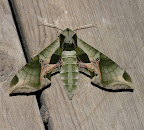


Pandorus Sphinx Moth posted on Nature in the Ozarks.


4:00 AM: Bedtime. Jo washed the dogs' bedding, but our rain and overcast skies prevented it from getting dry. Jo substituted an old towel inside the dogs' crates. Our problem child, Bucket, didn't want to go the bed because the old towel did not meet with her approval. 70º

10:00 AM: Light rain and drizzle continue. Another .9" of rain in the gauge since this time yesterday. That makes a total of 2.4" since this session of rain began. 73º

10:45 AM: OMG! The sun just broke through the clouds, a very brief glimpse of sunshine.

Noon: That bit of sunshine earlier was just a tease, and not even very much of one of those. Have seen no more sun.

Kiln fired okay. Jo is holding it at upper temperature for a while and then will slowly reduce the temperature before letting the kiln begin fully cooling.

2:00 PM: This could be just another tease, but the sun really seems to be breaking through the clouds now.

3:00 PM: Another very brief shower followed by the sun again. Our temperature is slowly beginning to climb and it's getting a little steamy.

5:00 PM: Skies continuing on a trend toward partly cloudy. Took our afternoon walk up to the gate. Non-threatening enough that I took the camera along. I'm glad I did because we found a terrific dung pile just teeming with insect life.

7:00 PM: Jo made a trip up to the main county road. She'd ordered a pair of shoes that were being shipped via UPS. The UPS tracking site said they'd been delivered, but we hadn't receive the package. That generally means that the UPS driver has left the package with our neighbors instead of bringing it all the way down to the house. Sure enough, Jo's package was at the B's house.

The B's also had a stray dog they were trying to find a good home for. It was a long-haired dachshund, not your typical country stray. Jo said it was very cute. I'm sure it was, but Jo knows as well as I that with our two dogs we already have about one-and-a-half dogs too many.

The dogs' bedding hanging out on the porch finally got dry today. I'm sure Bucket will be glad to have her crate furnished more to her liking tonight.
Share/Bookmark

Wednesday, August 6, 2008

Unloading the Kiln


Jo found the remote shutter thingy and decided to photograph herself unloading the kiln after a glaze firing.

.


Share/Bookmark