Showing posts with label Garden 2009. Show all posts

Sunday, October 18, 2009

Garden 2009: First Frost in the Fall Garden


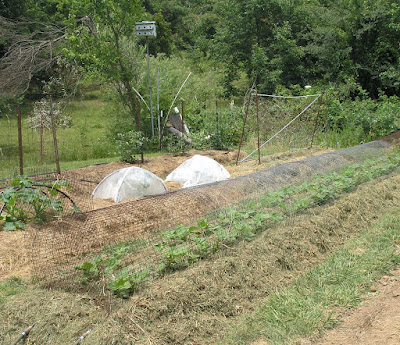
Fall Garden 2009: Our first frost was this morning (10/18/09) so Jo and I covered the wire hoops over our fall garden bed with plastic. Around mid-day Jo opened up the ends of the tunnel so everything inside wouldn't be cooked by today's full sunshine.


.
Share/Bookmark

Monday, September 28, 2009

Jimson Weed Seedpod


Jimson Weed seed pod.

From Wikipedia: Datura stramonium, known by the common names jimson weed, angel's trumpet, devil's weed, thorn apple, tolguacha, Jamestown weed, stinkweed, datura, moonflower, and, in South Africa, malpitte and mad seeds is, along with Datura metel (zombie cucumber), a common weed in the Solanaceae (the nightshade family). It contains tropane alkaloids that are sometimes used as a hallucinogen. The active ingredients are atropine, hyoscyamine and scopolamine which are classified as deliriants, or anticholinergics. Due to the elevated risk of overdose in uninformed users, many hospitalizations, and some deaths, are reported from recreational use.


Sunday, 9/27/09:

Sunday was another good day for being outside. I mowed again. With any luck, I might be able to finish the garden area tomorrow. Jo finished weeding our fall garden bed.

During the evening, I replaced the washing machine supply hoses. The hose on the hot water side sprang a leak while Jo was washing this morning. (A good reminder that one really should shut off the washing machine water supply valves when leaving on a trip.) I also replace the top thermostat on our hot water heater. Most of the time, it worked fine, but every once in a while the water coming out of our hot water heater was way too hot.

Another cold front is on the way down. It's approach caused a moderately gusty south wind and rapidly rising temperatures today. The temp climbed all the way up to 86°F/30°C and was still 77°F/25°C at midnight. The approaching front is not forecast to be dry.


Creative Commons License

.
Share/Bookmark

Friday, September 25, 2009

Zinnia Jungle


Here at season's end our zinnias are beginning to look a little tired, but are still producing a few new bloom. Every year the zinnias reseed themselves. Of course, they don't always sprout exactly where we want them, but we let as many grow as possible. In the beginning of the season, I try to keep them contained and keep the path between beds open, but by season's end they've multiplied, grown tall, fallen over and have become a zinnia jungle.


Creative Commons License

.
Share/Bookmark

Thursday, September 24, 2009

Garden 2009: Fall Garden


We planted a small fall garden for the first time in several years. It's doing well, but we're getting way behind with routine garden upkeep because our weather has been so wet. There are places where water is still standing out in the garden.


.
Share/Bookmark

Monday, September 7, 2009

Begging For Zucchini


What happens when you take a short trip and leave the garden unattended for a couple of days? Monster zucchinis try to take over the place. Rusty and Bucket like raw zucchini and know Jo usually gives them a slice of the overgrown squash before tossing the rest in the compost. They are waiting not very patiently for their treat.

Creative Commons License

.
Share/Bookmark

Thursday, August 27, 2009

Garden 2009: Okra and Sweet Potatoes


Our okra is a little slow in starting to produce this year. We've only harvested a few pods thus far. Okra is a southern crop that always seems to thrive in the heat of summer. I wonder if this summer has been too mild and pleasant for it to do well?


The sweet potato vines have filled their enclosure. I hope they are making lots of sweet potatoes underground. Our rabbits do a good job of keeping the vines pruned so they done sprawl all over the garden -- whether we really want them to prune or not.


Creative Commons License

.
Share/Bookmark

Sunday, August 16, 2009

Garden 2009: Garlic Planting


In the garden over the past several days:

GARLIC:  Jo planted garlic. Her technique is to use a spacing board and lay out all the cloves. Then, she uses the trowel to plant each clove. There's only one problem with this technique: Canine garden buddies. When Jo's back was turned, the dogs kept stealing garlic cloves. The didn't eat the garlic, just carried it off and played with it.

Here in the south, garlic is planted in late summer. It sprouts and the plants grow to a modest size before winter when they go dormant. As soon as the weather warms up in the spring, the garlic begins growing again. It's dug in mid-summer.

GREEN BEANS: Jo picked more and got them into the freezer.

YELLOW SQUASH AND ZUCCHINI: Mother Hubbard's cupboard was bare; ours is full of yellow squash and zucchini. Jo has tried freezing them in the past, but when thawed they are fall-apart mushy. She read somewhere online that they remain more firm if sliced and steam blanch instead of blanching in boiling water. She experimented with freezing a couple of pints using that method. We'll see.

CUCUMBERS: Production is far surpassing what I can eat. (Jo doesn't care for cucumbers.) Jo's intending to make some quickie pickles. We have quarts of regular canned pickles still left over from years past.

BED MULCHING: I've got three of the four fallow beds heavily mulched with grass clipping. I spread a layer of compost followed by a layer of manure. Then, I cover the beds with a layer of newspaper with the grass clipping on top. Our plan is that all we'll need to do next spring is pull back the mulch and plant. The possible flaw in this plan is: Armadillos. Armadillos love the bugs and earthworms that thrive under the mulch. If an armadillo discovers the beds and goes on a overnight feeding frenzy, the beds will look as if they've been tilled. Later in the fall, I can cover the beds with chicken wire we have for that purpose, but for now the beds have to stay uncovered so I can keep the weeds and especially Bermuda grass from growing into the beds from the aisles.


Creative Commons License

.
Share/Bookmark

Tuesday, August 11, 2009

Garden 2009: Cottontail Rabbit


Eastern Cottontail (Sylvilagus floridanus), one of our little garden helpers.


Monday, 8/10/09:

The day was mostly sunny until our afternoon walk time (4:00 PM) when thunderstorms started moving through our area. Scattered thunderstorms roamed for the following twelve hours or so. No severe storm passed over us. We ended up getting only .8"/2cm of rain. After the first couple of lines passed through, no rain fell for a couple of hours. We took the dogs for a walk up to the gate and Jo picked 9 pounds/.5Kg of green beans.


Creative Commons License
.

Share/Bookmark

Thursday, August 6, 2009

Garden 2009: Green Beans and Climbing Rabbits


Our first picking of green beans should occur later today or maybe tomorrow.  If we want to harvest any green beans, we must grow them inside a welded wire enclosure. Otherwise, the rabbits would eat them down to the ground.

The wire hoops really aren't quite large enough for the beans, so they send stems and leaves out through the mesh. In the past, the cottontails have done a very good job of keeping the ground level protruding stems and leaves trimmed back to the wire. This year, the rabbits took their trimming duties one step farther. At least one member of our local rabbit population learned how to either climb the wire or jump up on top of it. We've seen a rabbit sitting up on top of the wire hoops several times. And you can see there are few stems and leaves left sticking outside of the wire. Unfortunately, I seriously doubt we'll ever be able to get close enough to photograph the rabbit in action.

.
Share/Bookmark

Sunday, July 19, 2009

Garden 2009: A Squash Is Born

Summer (Yellow) Squash
And a zucchini too.


Due to our late start and abbreviated garden, we have three beds we are not using this summer. Two of those beds have been fully weeded and we are working on the third. My current project is getting these three beds heavily mulched. Our plan is to just leave them fallow until next spring. The mulch will keep the beds from refilling with weeds. They should be ready to plant with little effort next spring. The one possible major flaw in this plan is if an armadillo decides to search for insects in one (or more) of these fallow beds. After an armadillo roots around to his/her satisfaction, a bed ends up looking as if it's been tilled.
Share/Bookmark

Sunday, July 12, 2009

Garden 2009: Mulch


Contender bush beans mulched with grass clippings.


This week I got both the green bean and sweet potato beds mulched with grass clippings.  Mulch is essential to keep the moisture in and the weeds out.

Many experts recommend against using grass clippings for mulch.  I will willingly concede that grass clipping are far from the best mulch, they are what I've got, so I use them.

Grass clippings make poor mulch because:
  • They compact and, therefore, break down slowly.  (True, but here in the south with our high temperatures and long growing season that's not a problem.  By fall even grass clipping mulch will need to be reapplied.)
  • Grass clippings form a compact sheet that will shed rainfall.  (True, but we don't usually get a lot of summer rainfall anyway.  Drip irrigation hoses under the mulch provide water to our garden plants.)
    • Grass clippings import weed seeds into the garden.  (True, but so do most affordable, organic mulching mediums -- like hay.  The trick is to keep the beds mulched all the time, a trick we almost never accomplish so we pull a lot of weeds until we can get the beds mulched again.)


      .
      Share/Bookmark

      Friday, July 10, 2009

      Garden 2009: Zucchini Unveiled


      Jo planted three hills of squash on 6/19: Two yellow summer squash and one zucchini. She built row cover huts to protect the little squash plants once they sprouted. The huts provides some protection from the intense summer sun, but more importantly, they keep squash bugs and squash vine bore moths off the plants for a little while. Both pests are inescapable here if you garden without using pesticides as we do. The plants will eventually succumb to the bores or the bacterial wilt spread by the squash bugs. The goal is to get as much production out of the squash plants as possible before they die.


      All the squash sprouted well and by 7/6 the zucchini filled its row cover hut. The summer squash plants are smaller and can probably remain covered until they bloom. They must be uncovered then so they can be pollinated and produce fruit.


      Jo uncovered the zucchini on 7/8. They now on their own against the squash vine bores and squash bugs.

      I'm not a big fan of summer squash or zucchini. Both are okay if stir fried with enough other veggies to cover their taste. Jo likes both so we grow them. We also grow cucumbers which Jo doesn't care for.
      .
      .

      Share/Bookmark

      Wednesday, July 8, 2009

      Garden 2009: Sweet Potatoes


      Sweet potato sets a couple of days after Jo transplanted them into the garden. I'm sure they appreciated a couple of days of moderate temperatures and overcast skies after being set out.
      The wire enclosure is necessary to keep out rabbits -- and any deer that might get past the electric fence surrounding our garden. We would share with the critters, but the critters tend to eat everything. Deer seem to especially enjoy sweet potato vines.

      .

      Share/Bookmark

      Wednesday, April 15, 2009

      Gardening: Setting Out Transplants


                                                                                                              (Photo taken on 4/08/09 by Marvin)

      Gardening is a great hobby.  I especially enjoy taking photos of Jo working.  Here she is setting out cauliflower and broccoli transplants.


      .
      Share/Bookmark